What to do after Year 13?

Welcome to your post-Year 13 Student Zone
Your guide to your options after Year 13 and Higher Education.
Follow us on Instagram for exclusive student content!
@thinkhighercw
Life after Year 13:
Life after finishing year 13 or your T-level/ apprenticeship equivalent can be scary as there are so many pathways. But rest assured, we've got you covered.
Read on if you're interested in finding out more about university including...
- The benefits of going to university
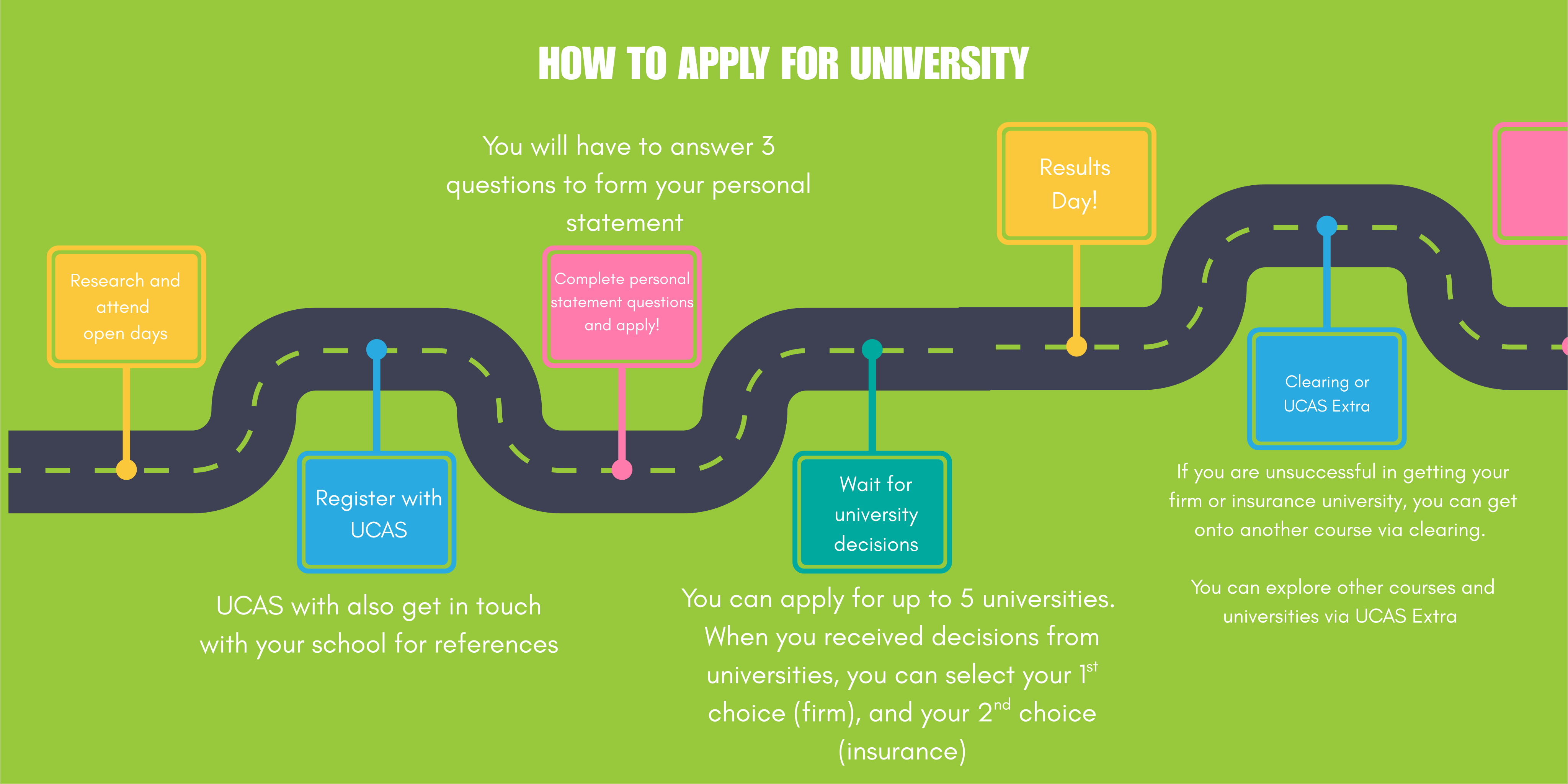
- When and how to apply
- Student finance
What can you do after Year 13?
Higher Education
Many young people decide to go to university after they finish year 13. They may want to study a subject they studied at A-level, or a different subject entirely because they are passionate about it, or want to follow a specific career path.
Read below to find out more about university.
Apprenticeship or work
Young people may want to go straight into earning money. They can do this by either getting a job, or by doing an apprenticeship where you work 80% of the time and study 20% of the time.
You can find out more about apprenticeship, and apply for them, on the government website.
Take a break
Maybe you just need a break from it all after an intense Year 13. And that's okay! Many students decide to take a gap year, a year in which they potentially volunteer, travel the world, or work before seeking full-time employment or enrolling on to a university course.
It is possible to enrol on to a university course and defer your start date to the following academic year.
Interested in Higher Education?
Tuition fee loans are there to cover the cost of the course. Currently, universities and colleges are able to charge up to a maximum of £9,790 per year for a typical full-time higher education course.
Anyone who meets the eligibility criteria can apply for a tuition fee loan to cover the cost of their course. You would apply for the entire cost of your tuitions fees, and it’s paid straight to the university or college where you study.
Applying to university timeline